

Effects of Chronic Occupational Dental Light Exposure on Retinal Health
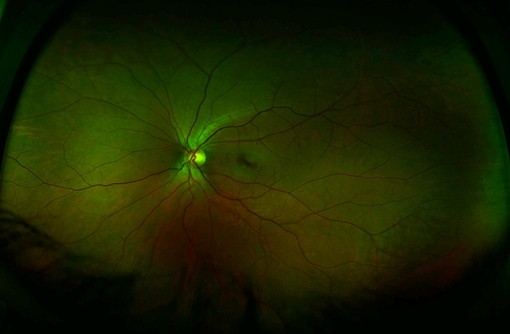
Chronic exposure to high-intensity light sources may disrupt retinal layers and contribute to vision impairment
Evidence linking occupational light exposure to structural and functional eye damage
CHENGDU, SICHUAN, CHINA, March 30, 2026 /EINPresswire.com/ -- Dentists are exposed to intense lighting for long hours, but its long-term impact on eye health is often overlooked. This study evaluates whether chronic exposure to dental lighting, especially blue and white LEDs, can damage the retina and disrupt its normal function. By combining human data with advanced imaging and animal models, the research uncovers hidden occupational risks and highlights the need for safer lighting practices to help protect dentists’ vision.Prolonged exposure to artificial lighting is an emerging occupational health concern, particularly in professions like dentistry, where high-intensity illumination is essential for precision work. Dentists spend extended hours under focused light sources, often without adequate protection, placing them at increased risk of ocular damage and vision-related disorders such as Age-related macular degeneration and Glaucoma. While previous research has largely focused on acute light-induced retinal injury, the long-term effects of chronic, low-to-moderate intensity exposure remain poorly understood. This gap in knowledge highlights the need to investigate how sustained dental lighting impacts retinal structure and function, particularly the integrity of the blood-retinal barrier, which is critical for maintaining visual health.
Researchers from Sichuan University conducted the present study to investigate whether long-term exposure to dental lighting contributes to retinal damage and to explore the mechanisms behind these potential effects. “We aimed to determine how chronic photodamage from dental light sources influences the stability of the blood-retinal barrier and the retinal vascular microenvironment” explains Prof. Junyu Chen. He adds, "The blood-retinal barrier plays a critical role in maintaining retinal homeostasis by regulating the movement of molecules between blood circulation and retinal tissue. Disruption of this barrier can lead to retinal ischemia, inflammation, and degeneration of vision-related structures." The study was published in the International Journal of Oral Science on February 13, 2026
A combined epidemiological and experimental approach was used to evaluate the effects of chronic dental lighting on retinal health. A cross-sectional survey of 14,523 individuals, including dentists and non-dentists, compared the prevalence of vision-related disorders using chi-square tests and logistic regression. To replicate real-world exposure, researchers developed a chronic photodamage model in rats exposed to halogen, white LED, and blue LED lights at different intensities (200 and 1000 Lux) for 8 hours daily over 6 months. Retinal changes were assessed through Optical Coherence Tomography, histological analysis, and advanced 3D tissue-clearing imaging to visualize the retinal vascular network. Additionally, RNA sequencing was performed to identify molecular and inflammatory changes associated with prolonged light exposure.
The results showed that dentists had a significantly higher prevalence of vision-related problems compared to non-dentists, with about 3.6 times greater risk. In the experimental model, chronic exposure to dental lighting, especially blue and white LED sources, caused substantial retinal damage, with the retinal vasculature emerging as a central target. This included disruption of both inner and outer blood-retinal barriers, reduction in retinal capillary density, and loss of vascular branching, ultimately impairing retinal homeostasis and energy metabolism.
“Structural damage to retinal cells and photoreceptors was also observed, particularly at higher light intensities. In addition, chronic light exposure triggered inflammation, with increased recruitment of immune cells and activation of the NF-κB signaling pathway. These changes were associated with impaired retinal energy metabolism and degeneration of vision-related structures” notes Prof. Chen.
These findings suggest a mechanistic pathway in which chronic light exposure induces oxidative stress, leading to vascular injury, activation of inflammatory signaling such as the NF-κB signaling pathway, and subsequent disruption of the blood-retinal barrier and retinal degeneration. The research highlights vascular damage and inflammation as key drivers of chronic retinal photodamage rather than solely neuronal injury.
The study provides important implications for occupational health and dental practice. The results suggest that minimizing light intensity, reducing exposure to blue light, and improving the design of dental illumination systems could help mitigate the risk of vision-related disorders among dentists. In particular, lower-intensity halogen lighting may represent a safer alternative to high-intensity LED sources.
The study is among the first to integrate large-scale epidemiological evidence with a chronic photodamage animal model and advanced three-dimensional retinal imaging, providing a comprehensive framework to examine occupational light exposure. It emphasizes the need for protective strategies and improved lighting technologies to safeguard the visual health of dental professionals, while paving the way for future research into targeted preventive and therapeutic approaches.
***
Reference
Title of original paper: Chronic dental lighting disrupts blood-retinal barrier homeostasis via vascular and inflammatory pathways
Journal: International Journal of Oral Science
DOI: 10.1038/s41368-025-00414-3
About Sichuan University
Sichuan University, founded in 1896, is a leading public research university located in Chengdu. It is one of the oldest and most prestigious universities in China. The university is well known for its strong academic programs in medicine, engineering, science, and the humanities. Sichuan University has multiple campuses and hosts tens of thousands of students from China and many other countries. It is also home to one of the largest medical schools in Asia and several national key research laboratories. With its long academic tradition, modern facilities, and international collaborations, the university plays a significant role in advancing research, innovation, and higher education in China.
Website: https://en.scu.edu.cn/
About Prof. Junyu Chen from Sichuan University
Junyu Chen is a PhD in Stomatology, Professor, and PhD Supervisor. He is a recipient of the National Excellent Young Scholars Fund, and is selected into the “Hundred-Talent Program” of Sichuan University. His research focuses on the regulation of bone injury repair by the vascular-lymphatic system. As first/corresponding author (including co-corresponding), he has published 52 papers with more than 3,000 citations and an H-index of 40. He holds 6 authorized invention patents and has led more than 10 national and provincial-level projects, including the National Natural Science Foundation of China and Sichuan Key R&D Program.
Funding information
This study was supported by the National Nature Science Foundations of China (Nos. 82270961, 82422021), Young Elite Scientist Sponsorship Program by CAST (No. 2023QNRC001), Sichuan Science and Technology Program (No. 2023JDRC0018), and Research Funding from West China School/Hospital of Stomatology Sichuan University (No. RCDWJS2024-5, RD-03-202401) to J.C. European Research Council (StG: metaNiche, 805201), Ministry of Education (MOE) Singapore: MOE-SUG and MOE Academic Research Funds Tier 1 (#024983-00001) to A.P.K.
Yini Bao
International Journal of Oral Science
2885546461 ext.
ijos@scu.edu.cn
Visit us on social media:
X
Legal Disclaimer:
EIN Presswire provides this news content "as is" without warranty of any kind. We do not accept any responsibility or liability for the accuracy, content, images, videos, licenses, completeness, legality, or reliability of the information contained in this article. If you have any complaints or copyright issues related to this article, kindly contact the author above.
